Define the perimeter and openings
- Map the fence line, corners, and gate locations before equipment staging is fixed. Consider lift turning radii near gates and material drops.
- Barricade runs for sidewalks or interior aisles should match the tightest pinch point so high-traffic moments remain passable.
Local terrain and weather factors
- Lake-effect snow and gusty winter conditions increase site-stability factors and bracing needs; base style and spacing matter more on open lots.
- Slopes on moraines and terraces can cause lean if bases don’t sit flat; panel connectors and weighted feet reduce twist on mixed surfaces.
- Soft soils after thaw call for broader bases or mats to keep lines straight.
Choose panel and base types
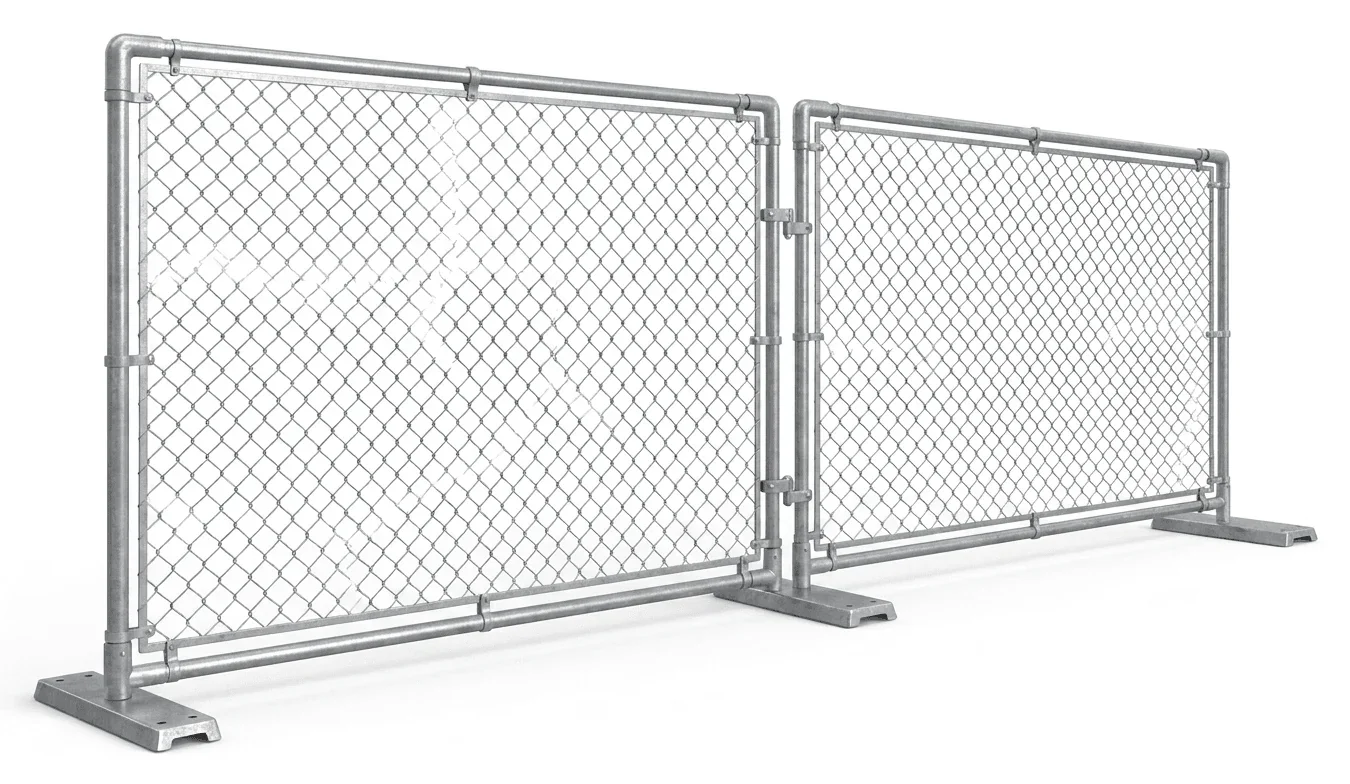
- Standard fence panels with weighted bases suit general site perimeters on asphalt or compacted gravel.
- Barricades with low profiles fit pedestrian redirection inside warehouses or at building entrances during façade work.
- Privacy or debris screens help near public areas but add wind load; plan spans and site-stability planning accordingly.
Gates and coordination with equipment
- Gate width should exceed the widest lift or delivery by a comfortable margin. Check turning space for /telehandler-rental/ and /forklift-rental/ near entries.
- Where booms or scissors operate close to the fence, verify setback so the machine can sit below or beside the task without contact. Compare reach footprints at /boom-lift-rental/ and /rough-terrain-scissor-lift-rental/.
Site procedures govern use
Exterior work and any elevated operation must follow site procedures and the selected equipment’s instructions. Weather changes in Kalamazoo can alter stability, visibility, and access mid-shift; reevaluate fence lines when conditions shift.