When an articulating boom makes sense in Kalamazoo
- The task is behind an obstacle where a straight path is blocked.
- The machine must approach from a side aisle or from below a catwalk.
- Indoor work needs electric drive and non-marking tires to protect specialty floors.
- Outdoor work sits on sloped or variable soils where ground clearance and traction matter.
In local pharmaceutical and device facilities, aisle widths, door headers, and controlled floors set the limits. For winter work, snow and slush outside often force interior staging, so knuckle articulation lets the basket clear overhead obstructions without moving heavy equipment lines. On mixed glacial soils around industrial sites, plan for uneven approaches and potential grade changes between parking areas and work pads.
Key constraints to note before comparing sizes
- Can the machine sit below the task and reach up-and-over without rotating into ductwork?
- Maximum platform height needed after clearing the obstacle.
- Narrowest doorway, corridor, or gate on the route.
- Floor type: sealed, coated, or clean-sensitive vs. outdoor aggregate.
- Expected slope or ruts at setup; whether outriggers are specified for the model.
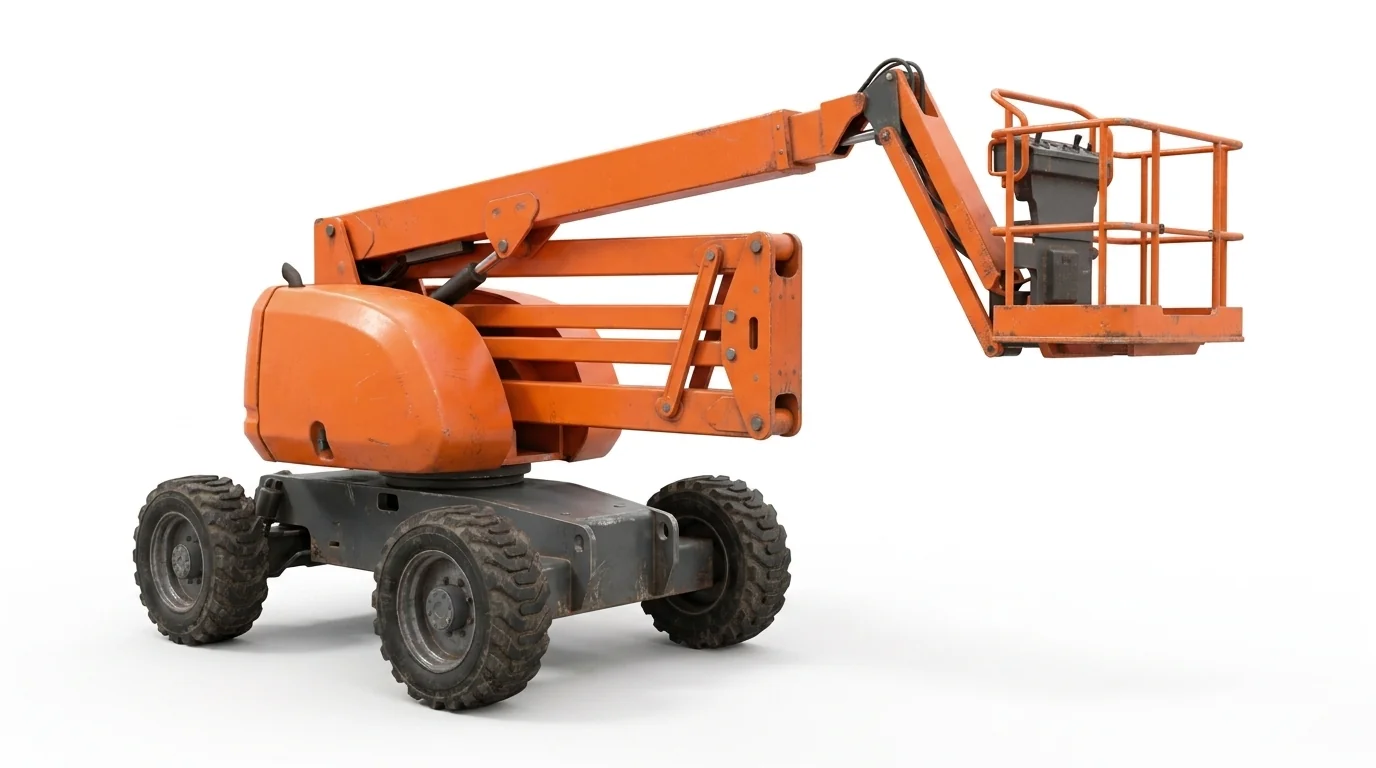
Articulating booms are commonly chosen over straight booms when the basket must snake through a window line or bridge around a mezzanine edge. For indoor projects with high standards, electric models with non-marking tires reduce floor impact and emissions. For exterior work, rough-terrain options with 4WD address rolling terraces and soft shoulders found around local jobsites.
Related categories by work setting
- Interior slab and controlled environments: see /electric-scissor-lift-rental/
- Open exterior reach without obstacles: see /telescopic-boom-lift-rental/
- General boom overview: see /boom-lift-rental/
Actual site conditions, the selected unit’s instructions, and job procedures govern elevated work in Kalamazoo’s regional climate.
Planning tip
Measure the horizontal offset from the base position to the task edge. Add the height of the obstacle you must clear. Those two numbers determine whether a mid-range knuckle boom can arc over the top or if a taller unit is required.