Match the platform to the grade and task
- Surface: soft ground, aggregate, and snow call for aggressive tread and wider stance. Concrete slabs can allow slab units, but verify finish and debris.
- Slope: approach ramps and graded lots influence stability. Actual conditions, the unit’s instructions, and site procedures govern suitability.
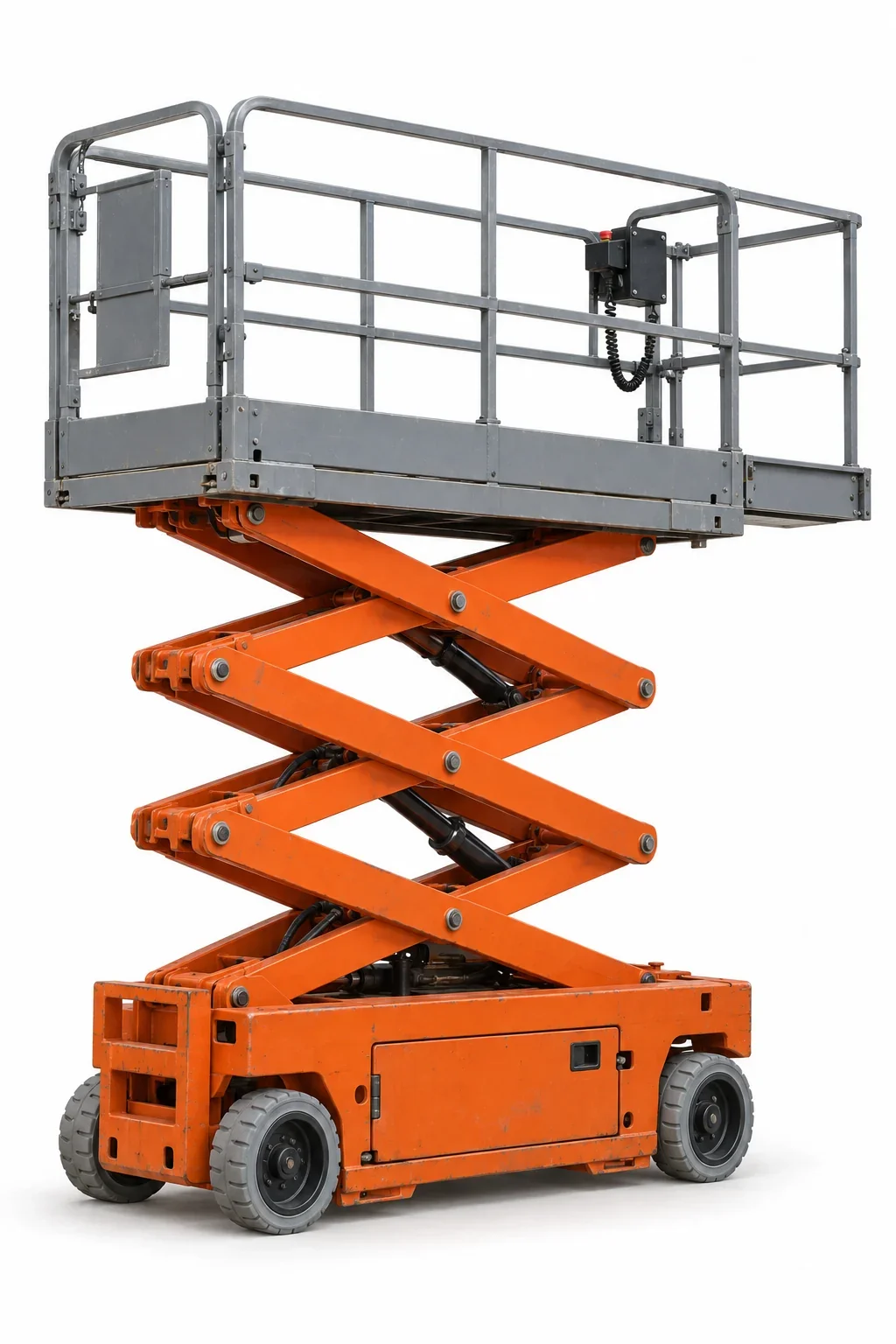
- Task type: framing, sheathing, utilities, and façade work benefit from larger decks and higher capacities typical of rough‑terrain scissors.
Local factors in Kalamazoo
- Lake‑effect winters leave snow and slush that challenge traction and level setup.
- Glacial soils and terraces vary from firm outwash to loamy surfaces; plan for changing bearing strength after rain or thaw.
- Multi‑building developments often require moving between pads and access roads; transport width and weight matter.
Sizing considerations
- Working height: choose platform height to reach the task with margin for tools and materials.
- Deck space and capacity: exterior trades often stage materials on the platform; confirm ratings.
- Power and runtime: long approach distances and cold starts affect fuel or battery planning.
When a boom lift is the better fit
If the lift cannot sit directly under the work due to setbacks, canopies, or utilities, compare Aerial Lift options, including Boom Lifts, for up‑and‑over reach.