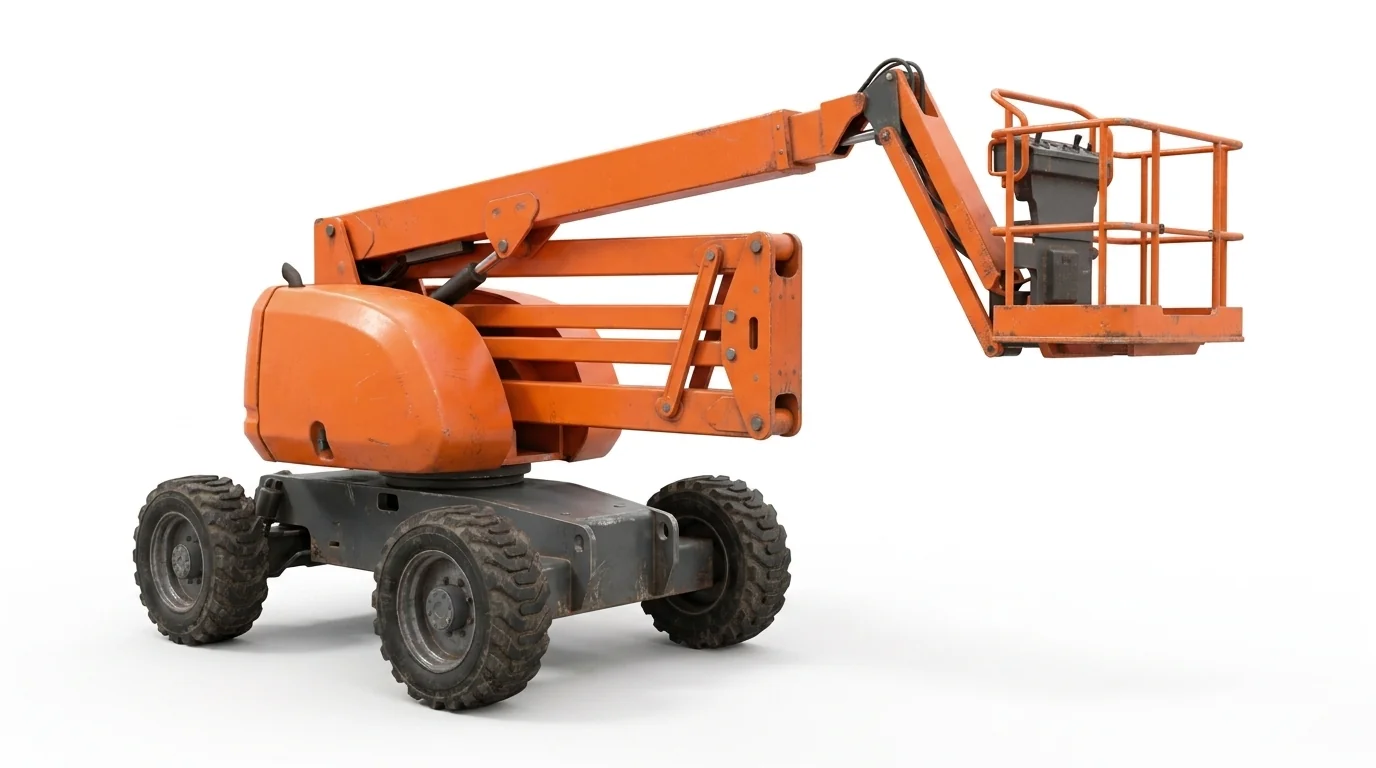
Fit a straight boom to local site geometry
- Clear line from base to work with minimal overhead obstruction.
- Sufficient setback room for the chassis and counterweight swing.
- Stable pad on outwash or terrace soils, often favoring rough-terrain configurations.
In regional construction, long runs along building exteriors, lighting standards, and signage typically favor a straight boom. Lake-effect winters push some exterior scopes into shoulder seasons; plan reach to keep the base on plowed or compacted ground while the basket accesses the work plane.
Measurements that narrow the choice
- Required platform height and horizontal reach in a straight line.
- Narrowest gate, drive, or access road along the transport path.
- Surface condition: compacted aggregate vs. soft or rutted approaches.
- Expected slope where the base will sit.
Where obstacles or interior utilities block the path, a knuckle unit may be better. For long, open spans—roof edges, exterior panels, or tank surfaces—telescopic lifts reduce cycle time. On sloped approaches common around local industrial sites, 4WD and appropriate tires increase stability options.
Related comparisons
- Need up-and-over around piping or mezzanines? See /articulating-boom-lift-rental/
- Looking for general aerial categories? See /boom-lift-rental/
- For slab-only interior tasks, consider /electric-scissor-lift-rental/
Actual conditions, the selected unit’s instructions, and site procedures govern elevated work in Kalamazoo’s regional climate.
Planning note
Confirm the setback distance available along the work face. That dimension, paired with required reach, indicates whether a mid-size straight boom can achieve the target without overextending or frequent repositioning.