Start with the job geometry
- Can the unit sit below the task or must it be co-located? Cabling length and voltage drop decide how far a generator can be from panels or tools.
- Is the light mast meant to flood a broad lot or a narrow lane? Mast height and head style matter more on tall structures and high-bay lots.
- What run window is required? Overnight concrete work and winter shift changes need different fuel and maintenance intervals than short service calls.
How Kalamazoo conditions change the choice
- Indoor work in biotech and clean production areas typically favors quiet, low-emission power with non-marking routing and attention to heat load. For lighting, low-glare, flicker-free heads reduce issues in inspection spaces.
- Winter snow and freezing wind on open sites push toward enclosed or cold-start-capable generators and light towers with stable stance and reliable mast locks.
- Outdoor tasks on rolling moraines and mixed soils call for 4-point leveling on trailers or skids and attention to tongue weight on slopes. Access roads across terraces can be narrow and soft; ground-bearing pressure and tire footprint affect placement.
Narrow the generator category
- Load profile: list peak vs continuous amps and motor inrush. Sensitive lab tools and IT rooms may need power with low harmonic distortion and tight voltage regulation.
- Location and ventilation: indoor plant rooms restrict exhaust and heat; exterior pads allow larger fuel tanks and longer runs.
- Distribution: distance to the load governs cable gauge and voltage drop; panel and connector type must match site gear.
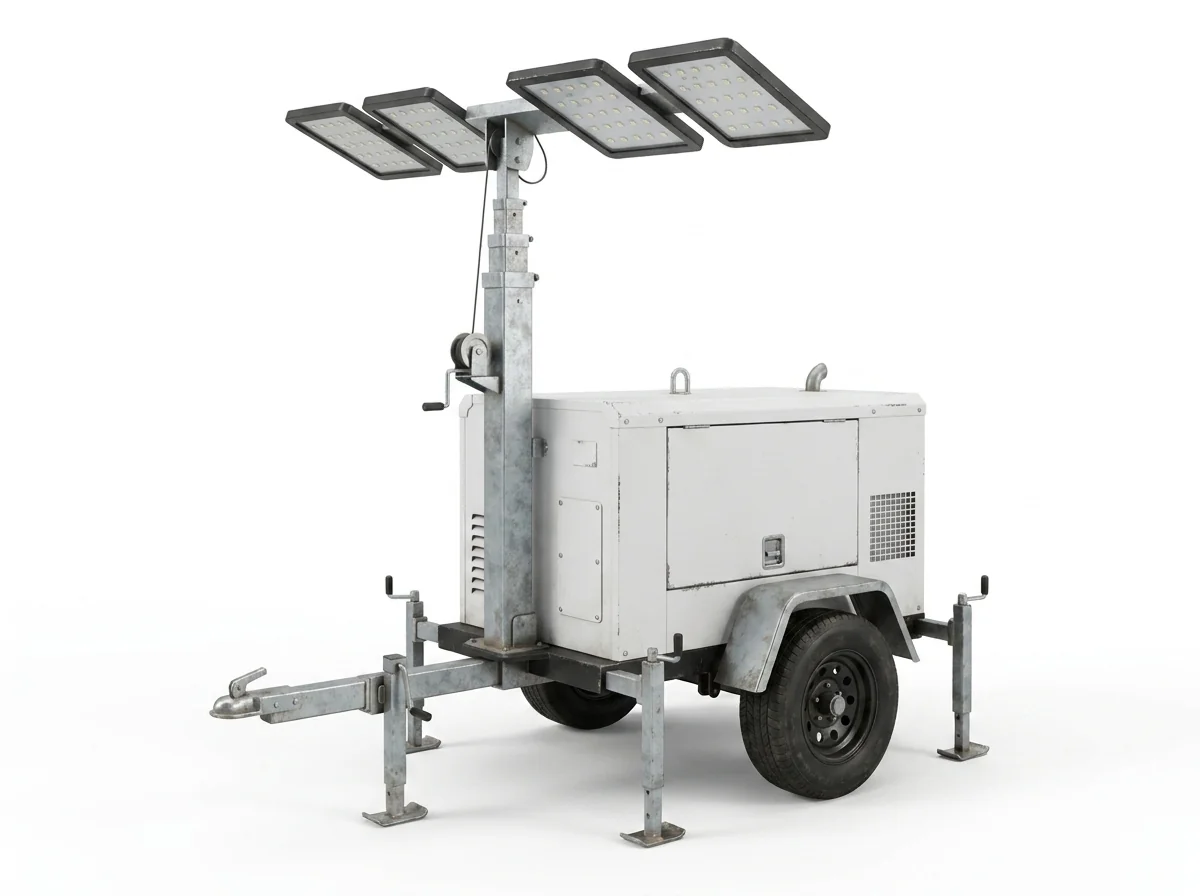
Narrow the light tower category
- Coverage pattern: measure the area and target illumination level; head count and aiming geometry decide spacing.
- Mast behavior: expected wind exposure and terrain grade influence whether stabilizers and outriggers can achieve level.
- Power source: standalone diesel units suit remote lots; plug-in electric towers fit inside facilities where combustion engines are restricted.
Access and routing checklist
- Route width, slope, and turning radius for towable units.
- Ground firmness for stabilizers or wheel pads.
- Cable paths that avoid clean zones, doors, and forklift aisles.
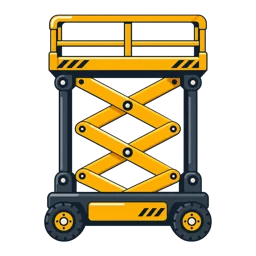
For elevated exterior tasks that also need lighting, compare lift reach and placement at /boom-lift-rental/ and /aerial-lift-rental/. For indoor maintenance in clean areas, see /electric-scissor-lift-rental/ for access planning that pairs with electric towers or facility power.