Match lift capacity to the real route
- Heaviest load at full expected reach governs size class.
- Pallet dimensions, rigging envelope, and visibility at the set point affect carriage choice.
- Gate widths and turning radii through local sites restrict overall machine length.
On regional jobs, snowbanks and soft shoulders can narrow access lanes. Glacial soils may rut during thaws, so ground clearance and 4WD are routine considerations. Confirm whether the final placement is on a deck, over parapets, or through window openings; that geometry influences boom length and frame leveling needs.
Common Kalamazoo use cases
- Moving units from laydown yards to upper floors during multi-story builds.
- Placing mechanicals across slab edges where a crane mobilization is not planned.
- Feeding materials along exterior lines when forklifts lack clearance or reach.
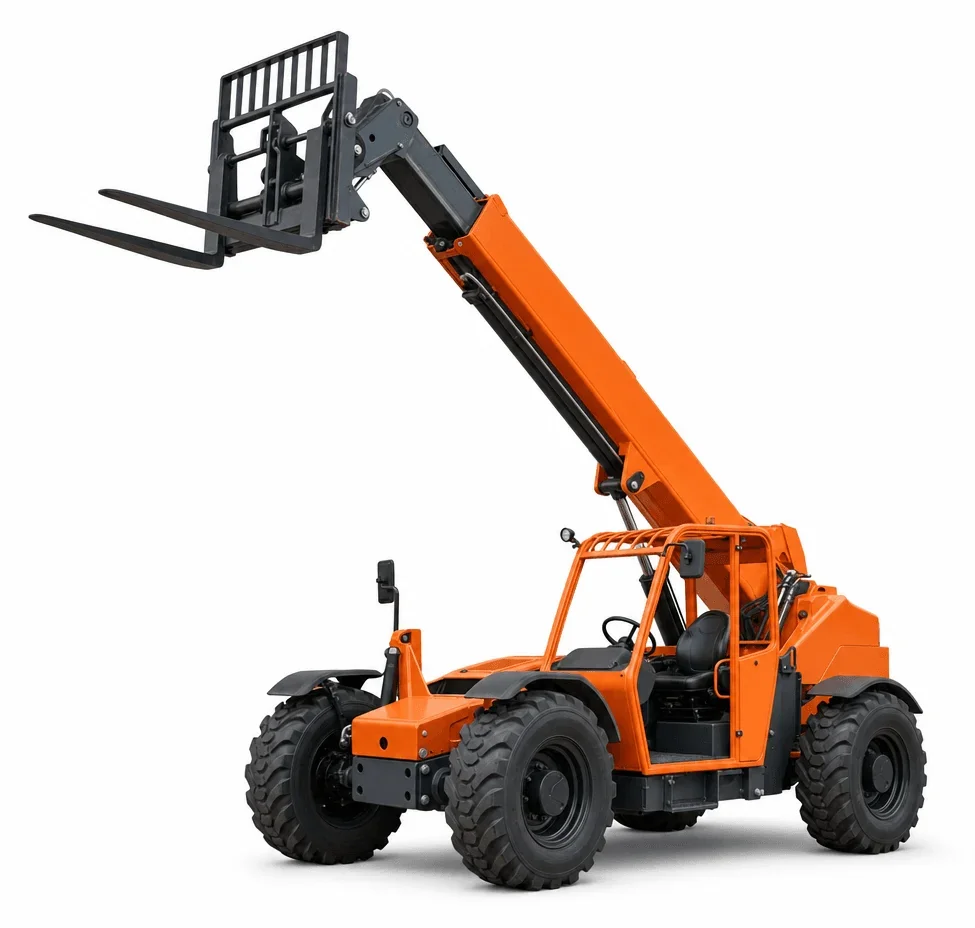
If most handling occurs on smooth interior slabs, a warehouse forklift may perform better. When the route crosses mixed surfaces and demands elevation, a telehandler is purpose-built for the task.
Related categories
- For pallet work on finished slabs: /forklift-rental/
- For man baskets and elevated install access: /telescopic-boom-lift-rental/ and /articulating-boom-lift-rental/
- Site logistics add-ons: /storage-containers-rental/ and /temporary-fencing-barricades-rental/
Actual site conditions, the selected unit’s instructions, and job procedures govern elevated and material handling work in Kalamazoo’s regional climate.
Planning note
Map the tightest turn on the route with the longest load you’ll carry. That often sets the upper limit on machine size before capacity even comes into play.